
When people think of Switzerland, a few images usually come to mind: mountains, precision watches, efficient trains… and chocolate. But Swiss chocolate is not just a sweet treat. It is a cultural identity, a global export success and a story of innovation that shaped how the world experiences chocolate today. From small Alpine workshops to globally recognised brands like Lindt & Sprüngli, Switzerland didn't just make chocolate popular — it helped redefine it. And today, tasting it where it was born is one of the most popular day trips in the country.
The secret behind Swiss chocolate
Swiss chocolate is known for something very specific: its texture. Smooth. Creamy. Melting evenly in the mouth. This is not an accident. It comes from a long tradition of refining production techniques, especially in the 19th century, when Swiss chocolatiers began improving grinding and conching. One of the key innovators behind this transformation was Rodolphe Lindt, whose invention of conching in 1879 gave chocolate its signature silkiness. That breakthrough is one of the reasons Swiss chocolate became world-famous. Today, that legacy continues at Lindt, where craftsmanship and industrial precision still go hand in hand.
From Alpine milk to global icon
Another reason Swiss chocolate stands out is milk. Switzerland has a long dairy tradition, and milk chocolate became a national speciality. In fact, it was born on the shores of Lake Geneva: in 1875, Daniel Peter created the first milk chocolate in Vevey, using the condensed milk developed by his neighbour, Henri Nestlé. The combination of high-quality Alpine milk and refined techniques created a style that quickly spread far beyond Switzerland's borders. One of the most iconic examples is Toblerone, with its distinctive triangular shape said to be inspired by the Matterhorn. First created in Bern in 1908, it is now one of the most recognisable chocolate bars in the world. But Swiss chocolate is not only about industrial success. It is also about regional craftsmanship and tradition.
Gruyères and Broc: the Swiss chocolate heartland
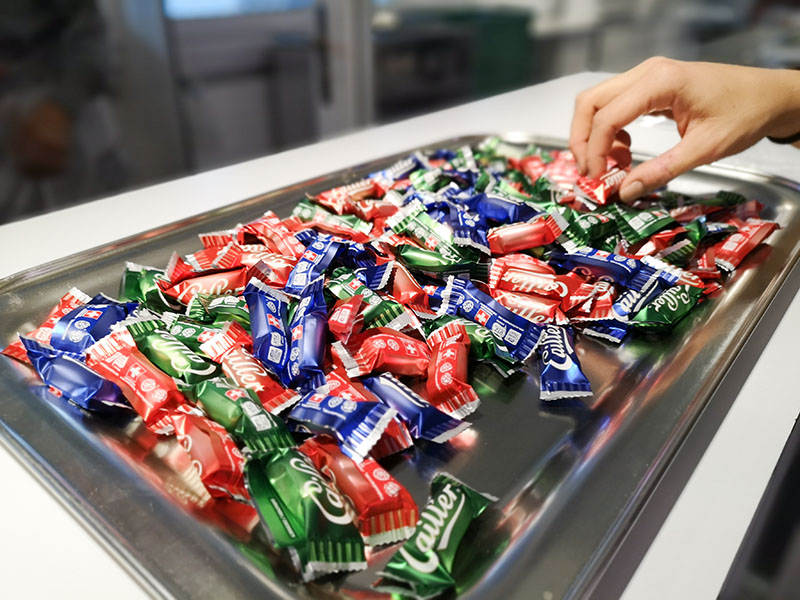
In the canton of Fribourg, chocolate is not just made — it is celebrated. One of the most historic names is Cailler, founded in 1819 and considered the oldest Swiss chocolate brand still in production today. Cailler helped establish Switzerland as a chocolate-producing country long before global branding existed. Today, visitors can explore its heritage at Maison Cailler in Broc, just a few minutes from the medieval village of Gruyères. Here, chocolate-making becomes an immersive experience — from cocoa beans to finished bars.
Chocolate culture in everyday Switzerland
In Switzerland, chocolate is not reserved for special occasions. It is part of daily life. You will find it: • in train stations • in office drawers • in cafés, next to an espresso • in hotel welcome gifts • offered casually to guests at home It is also deeply tied to tourism. Visitors often associate Switzerland with tasting experiences — from boutique chocolatiers in Zurich to factory tours in the countryside. In Zurich, you can easily spend a day exploring chocolate shops the same way you might explore museums or architecture. Just outside the city, in Kilchberg, Lindt Home of Chocolate tells the story of Swiss chocolate from bean to bar.
Chocolate day trips from Geneva and Zurich
The best way to understand Swiss chocolate is to taste it where it is made. From Geneva, a day trip to Gruyères combines the medieval village, the Swiss countryside and a chocolate and cheese tasting — with the Cailler story right on the doorstep. It is one of the most popular tours from Geneva and Lausanne, and an easy way to see a different side of Switzerland in a single day. From Zurich, chocolate pairs with one of Europe's most powerful waterfalls: our Rhine Falls, chocolate and cheese tour brings together nature, tradition and tasting in one excursion. And if you're exploring the Lake Geneva region, a tour to Montreux and the Swiss Riviera takes you right past Vevey, the town where milk chocolate began.
Final Thought
Swiss chocolate is more than sugar and cocoa. It is engineering disguised as pleasure, tradition refined into texture, and national identity expressed in a small, edible form. From the smooth creations of Lindt & Sprüngli to the geometric shape of Toblerone and the heritage of Cailler, Switzerland has turned chocolate into something surprisingly serious — and universally loved. So the next time you unwrap a piece of Swiss chocolate, it is worth remembering: it is not just a sweet moment. It is a piece of Swiss history you can taste.