
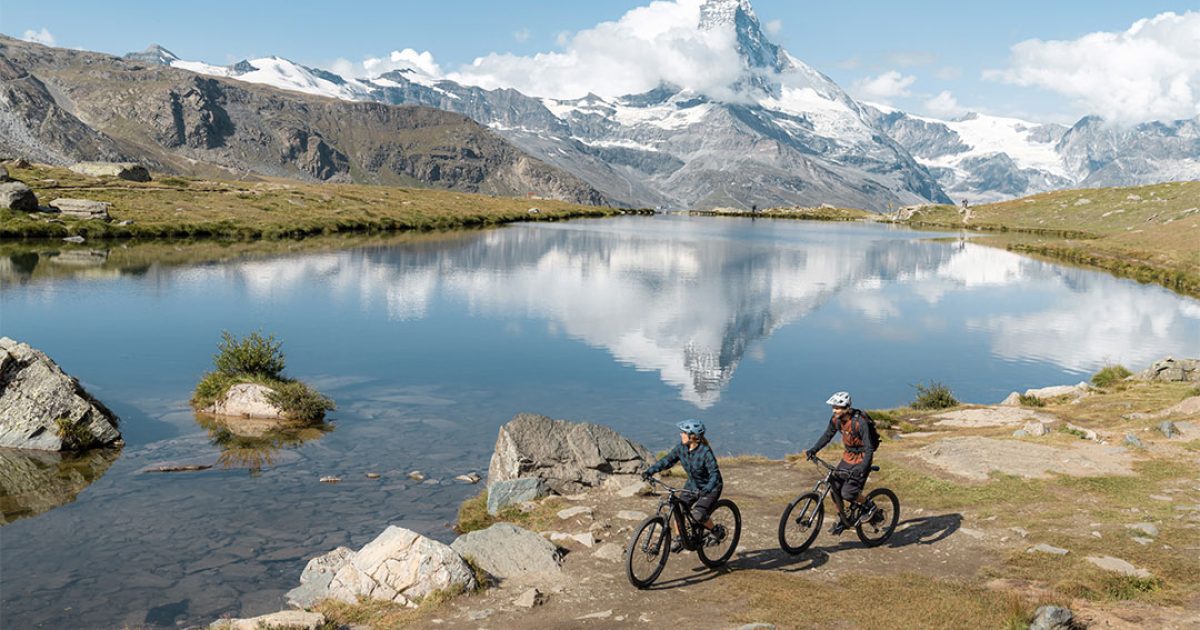
Have you ever wondered why almost every Swiss road seems to lead to a mountain view? Or how Switzerland became one of the most spectacular mountain destinations in Europe? There is a simple answer: Mountains are everywhere.
Switzerland is home to more than 1,500 peaks rising above 2,000 metres. And that means that wherever you go, there is a good chance that a mountain is waiting around the next corner.
A Country Shaped by Mountains
The Alps cover a large part of Switzerland across breathtaking regions such as Valais, Graubünden, the Bernese Oberland, and Central Switzerland. They have shaped the country's landscapes, culture, traditions, and way of life for centuries. From deep valleys and peaceful alpine villages to dramatic peaks covered in snow, the Swiss mountains are never far away. In some places, you can leave a city in the morning and be surrounded by spectacular Alpine scenery only a short time later. That is one of the things that makes travelling through Switzerland so special. The journey itself becomes part of the experience.
More Than Just Mountains
The Swiss Alps are not only about climbing peaks. They are also about discovering what happens between them. Small mountain villages like Lauterbrunnen and Grindelwald. Green meadows. Crystal-clear lakes (such as Lake Geneva and Lake Lucerne). Traditional wooden chalets and roaring waterfalls. Hiking trails. And panoramic train routes, including the iconic Glacier Express, Bernina Express, GoldenPass Line, and the historic Jungfrau Cogwheel Railway, winding through some of Europe's most impressive landscapes. Whether you are looking for adventure or simply want to enjoy the view, the Alps have something for everyone.
What are the most famous mountain peaks in Switzerland?
Switzerland is home to some of Europe's most famous mountains.
The Matterhorn is perhaps the most recognisable of them all, with its distinctive pyramid shape rising above Zermatt.
Then there is Jungfrau, part of the spectacular Bernese Alps and home to the "Top of Europe".
And Titlis (Central Switzerland), rising above Engelberg, where visitors can experience snow and ice even during the summer months.
Glacier 3000 (Vaud Alps). Known for its breathtaking suspension Peak Walk and panoramic views stretching across to Mont Blanc.
These mountains have become symbols of Switzerland around the world.
But they are only a small part of the story.
With more than 1,500 peaks above 2,000 metres, they are only the beginning of the story. You can easily reach these peaks on a Keytours excursion.
When is the best time to visit the Swiss Alps?
The Swiss Alps are not just a winter destination. In winter, the mountains become a paradise for skiing, snowboarding, and other snow activities. In spring, the valleys begin to turn green. Summer brings hiking, mountain excursions, and spectacular panoramic views. And in autumn, the forests transform into a beautiful mix of golden and red colours. Every season offers a different Switzerland. And every season has its own reason to visit.
Why the Mountains Matter to Switzerland ?
For generations, the Alps have influenced Swiss traditions and local communities. Mountain farming, hiking, skiing, tourism, and even Swiss cuisine are closely connected to the Alpine environment. The mountains are not simply a backdrop. They are part of Swiss identity. They have shaped the way people live, work, travel, and enjoy their country.
Final Thought
More than 1,500 peaks above 2,000 metres. Think about that for a moment. It means that in Switzerland, spectacular mountain views aren't reserved for special occasions. They are part of everyday life. A road trip. A train journey. A hike. A visit to a village. Even a simple drive can turn into an unforgettable experience. So the next time you travel through Switzerland, don't forget to look out the window. The next breathtaking view might be just around the corner. And keep your camera ready. Welcome to Switzerland.